HomeEntomophagesTrichogrammaTrichogramma evanescens
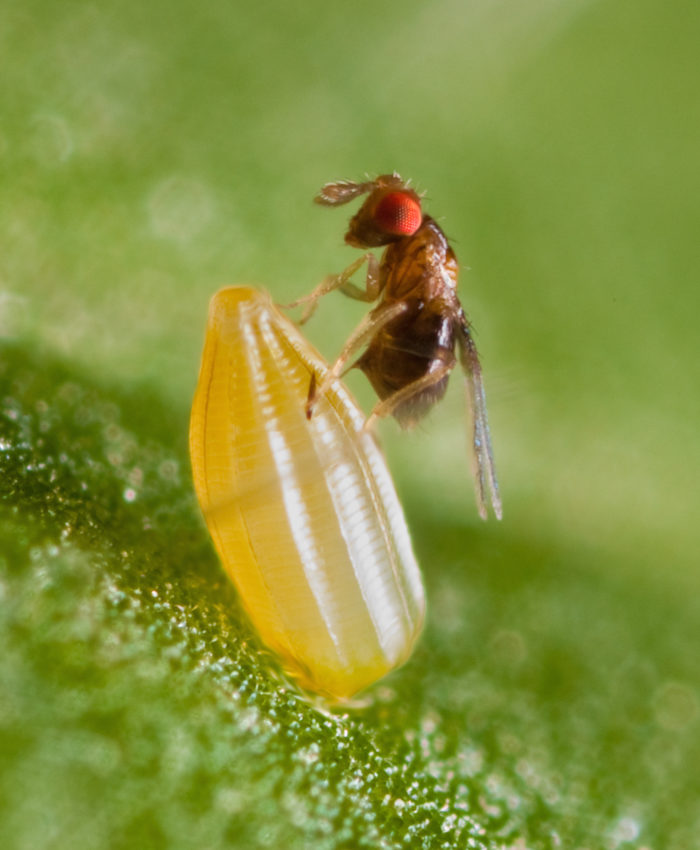
Trichogramma evanescens
Trichogramma evanescens is one of the most widespread and economically significant parasitic wasp species, widely used in biological control against various pests from the order Lepidoptera. It has a strong preference for the eggs of pests found in forests, parks, vineyards, orchards, and technical crops such as corn, sunflower, and others.
Taxonomy
Class: Insecta
Order: Hymenoptera
Family: Trichogrammatidae
Life Cycle
The life cycle of Trichogramma evanescens consists of four main stages:
Egg: Female wasps lay their eggs inside the eggs of pests, parasitizing them.
Larva: The larva hatches inside the host egg and feeds on its contents. Development lasts between 3 to 5 days before progressing to the next stage (pupa).
Pupa: Pupal development into an adult (imago) occurs quickly, typically within 2 to 3 days. The adult then breaks through the shell of the host egg and emerges. In most cases, Trichogramma parasitizes small host eggs, laying only 1, or at most 2, eggs inside each. In rare cases—when parasitizing larger Lepidoptera eggs—it may lay more than 10 eggs.
Adult Wasp: The lifespan of an adult wasp is typically 7 to 10 days, though under optimal conditions, it can reach up to 15 days.
Males emerge first, and their sole function is to fertilize the females. Male Trichogramma wasps have highly developed reproductive abilities and can fertilize a large number of females. However, their lifespan is shorter—up to 7 days.
Female wasps are born with a fully developed reproductive system and can be fertilized immediately upon emerging from the egg. After fertilization, the female begins searching for pest eggs, with a reproductive capacity of up to 120 eggs. If a Trichogramma female is fertilized, she primarily produces female offspring. If a Trichogramma female is not fertilized, she self-reproduces but produces only male offspring.
Application in Pest Control
Trichogramma evanescens is an egg parasitoid and exclusively targets the eggs of pests from the Lepidoptera family. In rare cases, it may parasitize the eggs of other insects. By parasitizing pest eggs, Trichogramma evanescens suppresses their populations, destroying their larvae and replacing them with its own offspring. From the parasitized pest egg, a beneficial Trichogramma wasp hatches instead.
Each Trichogramma species has specific host preferences. Trichogramma evanescens primarily parasitizes the eggs of:
-Cotton Bollworm (Helicoverpa armigera)
-Beet Webworm (Loxostege sticticalis)
-Corn Borer (Ostrinia nubilalis)
-Sunflower Moth (Homeosoma nebulella)
-Greater Wax Moth (Galleria mellonella)
-Spider Mites (Tetranychus urticae)
As well as the eggs of other Lepidoptera pests.
Usage in Sustainable Agriculture
Trichogramma evanescens is widely used in organic farming through the release of capsules containing parasitoid eggs or manual colonization using release boxes. It is one of the most effective natural enemies of agricultural pests and plays a crucial role in sustainable farming and biological pest control.
Benefits of Trichogramma evanescens
-Completely safe for humans, plants, and animals
-Does not pollute soil, water, or the environment
-Leaves no chemical residues on agricultural products
-Does not cause resistance in pests
-Contributes to sustainable agriculture and reduces the need for pesticides
© 2025 ORGANIC INVEST BIO PROTECTION Ltd.